
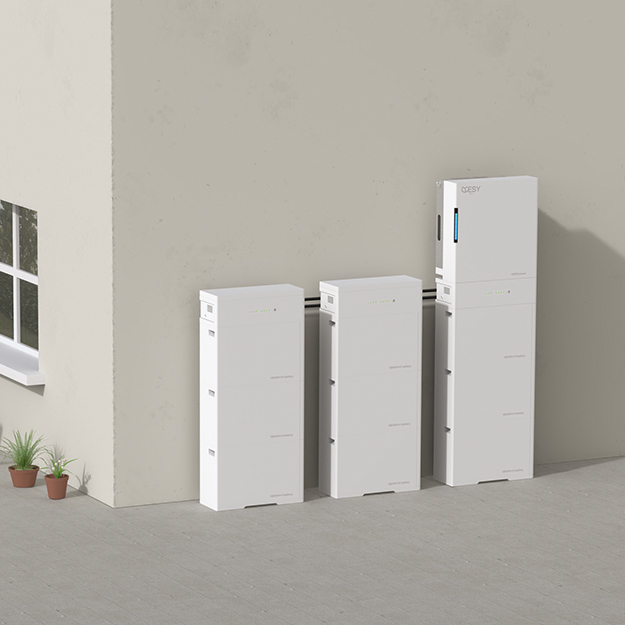
A 20kW three-phase home ESS with 90kWh storage can support rising household electricity demand by combining higher inverter output, larger battery capacity, and modular expansion. Compared with single-phase systems limited to around 5–10kW, a three-phase ESS can manage larger homes, EV charging, heat pumps, workshops, and agricultural equipment. A properly sized system can provide longer backup duration, smoother power distribution, and easier future expansion without replacing the complete installation.
Residential electricity use has changed significantly since 2020. More households are adding electric vehicles, heat pumps, induction cooking, and smart home equipment, increasing daily consumption by 30–70% in many regions. Traditional backup systems designed around basic household loads may not provide enough power for modern electrical demand.
A parallel ESS architecture allows several battery and inverter units to operate as one coordinated system. Instead of depending on a single power conversion unit, the system shares output among multiple modules. For example, three 10kW inverter units can provide approximately 30kW of available output when properly configured, allowing the system to supply higher demand during peak periods.
“A modular storage system allows homeowners to increase capacity as electricity needs grow instead of replacing the entire system after a few years.”
The ability to expand capacity is especially important for properties where electricity consumption changes over time. A household may initially require 15kWh of daily storage, but EV ownership, home heating upgrades, or additional equipment can increase this requirement to 40–60kWh. A scalable ESS design allows additional battery modules to be added without major changes to the electrical structure.
| System Type | Typical Output | Common Storage Range | Suitable Use |
|---|---|---|---|
| Single-phase home ESS | 3–10kW | 5–30kWh | Small residential backup |
| Three-phase residential ESS | 10–30kW | 30–100kWh | Large homes, farms |
| Commercial modular ESS | 50kW+ | 100kWh+ | Small businesses and facilities |
Three-phase systems provide advantages when homes have larger electrical equipment. Many residential properties in North America, Europe, and Australia use three-phase power for workshops, agricultural buildings, swimming pools, and high-power appliances. Compared with single-phase systems, three-phase power can distribute current across multiple lines, reducing current concentration and improving equipment compatibility.
A system such as a 20kW three-phase home ESS with 90kWh storage can provide substantial backup capability for properties with higher electricity demand. A 90kWh battery can theoretically supply 3kW of continuous household consumption for about 30 hours, while lower consumption levels can extend backup duration beyond several days depending on energy usage.
Battery capacity alone does not determine system performance. The inverter rating controls how much power can be delivered at one time. A home may have a large battery but still experience limitations if the inverter output is too small. For example, a 60kWh battery connected to a 5kW inverter cannot operate large appliances that require 8–10kW startup power.
Parallel ESS systems solve this limitation by increasing both storage capacity and power output. Multiple inverter modules communicate through control systems that monitor voltage, current, frequency, and battery state of charge. Modern systems commonly maintain power-sharing accuracy within approximately 2–5%, allowing each inverter to contribute similar output during operation.
Thermal performance also improves when power is distributed across multiple units. Inverter components such as IGBT modules, MOSFETs, and capacitors experience lower individual stress when current is shared. Battery cells also benefit because the system can manage charging and discharging rates more effectively. Maintaining lithium battery temperatures between 15°C and 35°C is generally recommended for longer service life.
“Sharing power across multiple modules reduces the operating pressure on individual components and supports longer equipment service periods.”
Load growth is common in residential energy systems. According to market studies published after 2022, EV adoption has increased household electricity consumption in many areas by approximately 20–50%. A typical Level 2 EV charger can add 7–12kWh of daily energy demand, while electric heating systems may increase winter electricity use by 30% or more.
Large properties often require higher starting power because motors create short-term current increases. Examples include water pumps, air compressors, refrigeration systems, and workshop equipment. A parallel ESS with higher inverter capacity can provide short-duration surge power without relying completely on the utility grid.
Agricultural users benefit from similar system characteristics. Farms may have irregular electricity demand caused by irrigation schedules, cooling equipment, and livestock systems. A storage system with expandable architecture can provide energy during grid outages and reduce dependence on peak electricity pricing periods.
The economic model of modular ESS installation is also different from fixed systems. Instead of installing maximum capacity on the first day, users can start with a smaller configuration and expand later. For example, a property owner may install 30kWh of storage in 2026 and increase capacity to 90kWh by 2030 as electricity consumption increases.
| Growth Stage | Storage Capacity | Typical Application |
|---|---|---|
| Initial installation | 20–40kWh | Basic backup and solar storage |
| Medium expansion | 50–70kWh | EV charging and heating support |
| Full expansion | 80–100kWh | Large residential or farm operation |
Energy management software improves how parallel ESS systems operate. Modern controllers collect information from batteries, solar systems, and household loads. Based on electricity prices, weather forecasts, and consumption patterns, the system can decide when to charge batteries and when to supply household loads.
Solar integration is another important application. A larger ESS allows homeowners to store more daytime solar generation and use it during evening periods. For example, a 15kW rooftop solar system may produce excess electricity during midday, and a 90kWh battery can store a significant portion of this production for later use.
Backup performance is also improved through load prioritization. During grid outages, energy management systems can separate essential circuits from non-essential loads. Refrigeration, lighting, communication equipment, and security systems can continue operating while high-consumption devices are controlled according to available battery capacity.
Safety requirements become more important as storage size increases. Systems above residential battery levels require battery management systems, temperature monitoring, circuit protection, and communication fault detection. International standards such as UL 9540, UL 1973, and IEC 62619 define testing requirements for stationary energy storage equipment.
The future of residential energy systems will continue moving toward higher capacity and flexible expansion. Electricity consumption patterns in 2030 will likely include more EV charging, electric heating, and distributed renewable energy compared with 2025. ESS designs that support additional batteries and inverter modules can adapt to these changes without requiring complete replacement.
Parallel ESS technology provides homeowners, farms, and small facilities with a practical method to handle increasing electricity demand. By combining scalable battery storage, three-phase power management, and modular inverter expansion, these systems can support larger loads while maintaining reliable backup performance over many years.